
Our History
UNT Health Fort Worth was founded as the Texas College of Osteopathic Medicine.
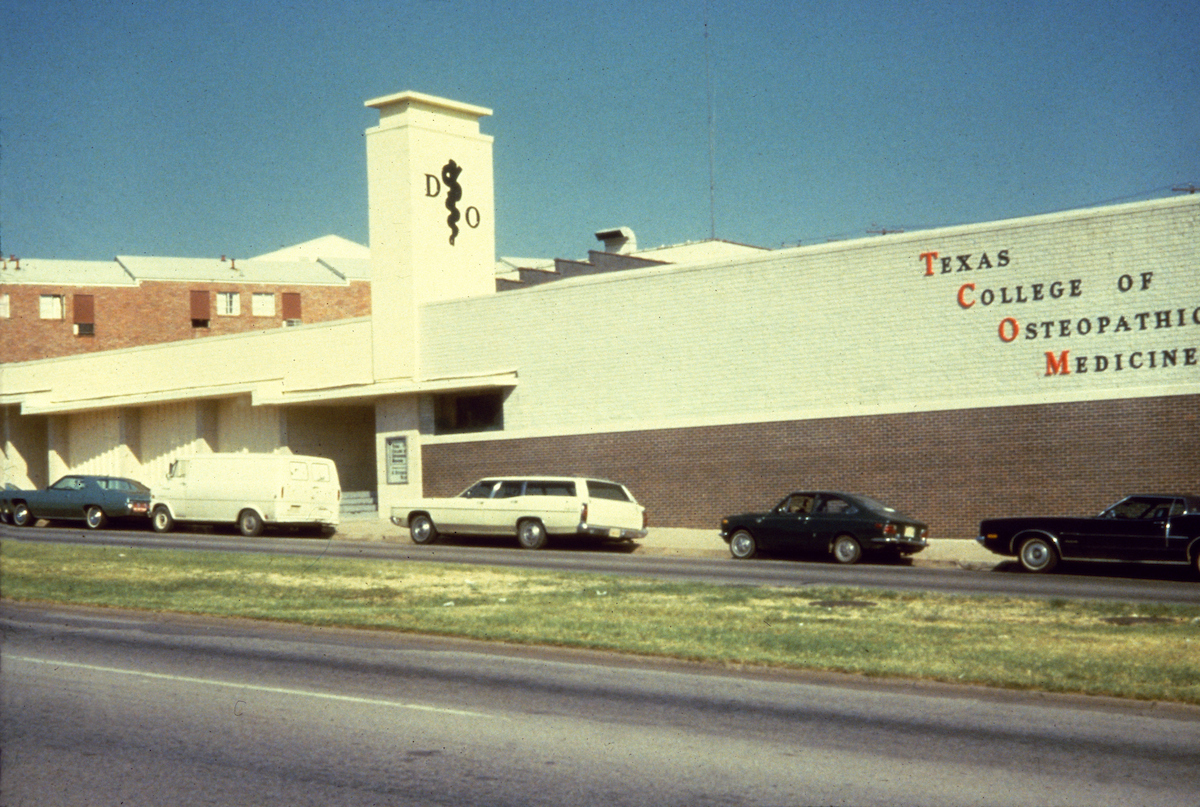
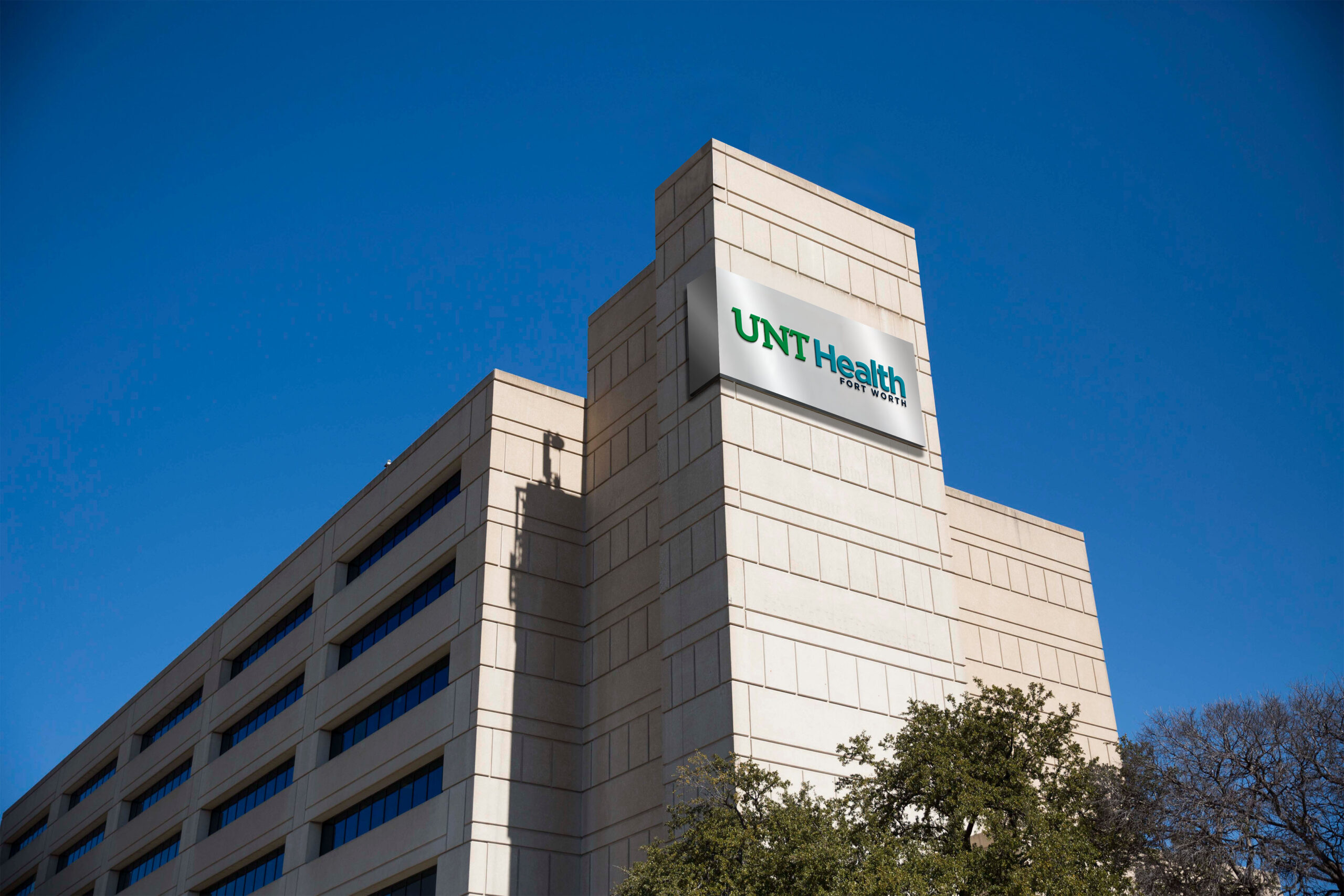
TCOM accepted its first class of 20 students in 1970 and celebrated its first graduation in 1974 with 18 graduates. The next year, TCOM officially merged with the North Texas State University — now the University of North Texas.
In 1993, the Graduate School of Biomedical Sciences was established, which marked the beginning of expansion into a graduate university with multiple colleges and degree options. That same year, the university’s name was changed to the University of North Texas Health Science Center. The university rebranded in July 2025 to UNT Health Fort Worth.
UNT Health’s colleges and founding dates are as follows:
- 1970 – Texas College of Osteopathic Medicine
- 1993 – School of Biomedical Sciences
- 1999 – School of Public Health
- 2004 – School of Health Professions
- 2013 – UNT System College of Pharmacy
- 2023 – College of Nursing
In 2004, the Center for BioHealth opened. CBH is now home to the Center for Human Identification and Institute for Translational Research.
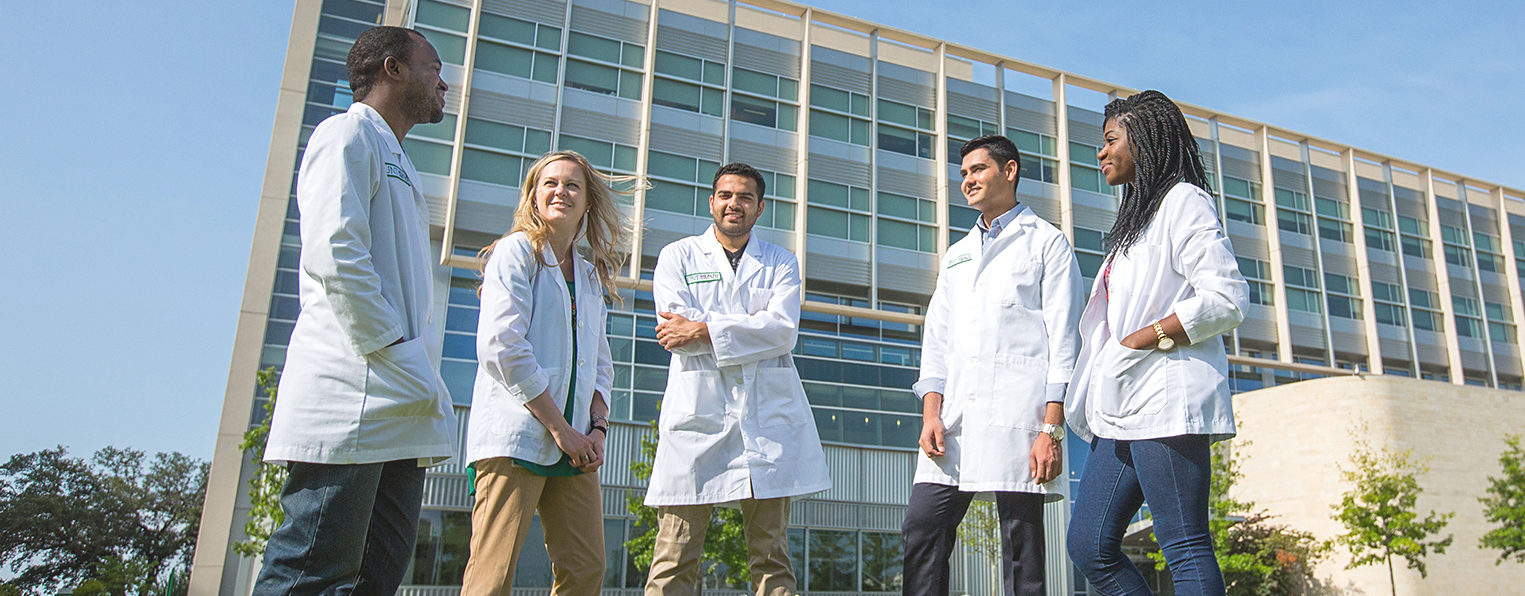
In 2010, the Medical Education and Training Building opened its doors for the first time. The first class hosted was TCOM’s “Mechanisms of Disease.” This building houses classrooms and clinical training spaces, as well as an 11,500-square-foot auditorium.
In 2020, UNT Health celebrated its 50th anniversary. The university helped in COVID-19 efforts through contact tracing and setting up one of the city’s first vaccine clinics.
A year later, UNT Health’s Institute of Health Disparities, led by Dr. Jamboor Vishwanatha, received a $100 million grant for its AIM-AHEAD program.
In 2022, UNT Health celebrated the grand opening of the Regional Simulation Center, which offers immersive virtual reality experiences. UNT Health’s first undergraduate degree – a Bachelor of Science in Biomedical Sciences – was offered to students. TCOM’s Institute for Translational Research, led by Dr. Sid O’Bryant, also received a $150 million grant for Alzheimer’s disease research. This is the largest-ever grant in UNT System history.
UNT Health clarified in 2024 the difference between colleges, which offer degrees, and schools, which provide administration support. The School of Health Professions became the College of Health Professions. The School of Public Health was renamed the College of Public Health. The School of Biomedical Sciences became the College of Biomedical and Translational Sciences to underscore its commitment to bridging the gap between research and real-world applications.
In 2026, a strategic academic reorganization caused UNT Health to transition from six colleges to four colleges. The change was designed to strengthen interdisciplinary collaboration, improve operational efficiency and support long-term, mission-driven growth. UNT Health’s colleges now are the Texas College of Osteopathic Medicine, College of Biomedical and Translational Sciences, College of Nursing and College of Pharmacy and Health Professions. No degrees were eliminated because of the reorganization.
Explore Our Timeline
1966: Three osteopathic physicians, D.D. Beyer, George Luibel and Carl Everett, procure a charter from the State of Texas for the Texas College of Osteopathic Medicine.
1970: TCOM opens as a private college of osteopathic medicine with an entering class of 20 students.
1971: A renovated bowling alley on Camp Bowie Boulevard houses classrooms, basic science laboratories and administrative offices.
1974: The first class of 18 graduates receive their Doctor of Osteopathy (DO) degrees.
1976: Ground is broken for the first permanent building on campus, what is now the Carl E. Everett Education and Administration Building.
1979: The Cowtown Marathon is established, co-sponsored by TCOM’s Institute for Human Fitness.
1982: Medical Education Building 2, now the Research Building, opens, providing classrooms, basic science offices and laboratories.
1986: Medical Education Building 3, now the Gibson D. Lewis Health Science Library, opens, housing a state-of-the-art library, computing services and biomedical communications.
1990: The DNA Identity Laboratory is created with a special state appropriation to reduce a backlog of paternity cases pending in state courts.
1993: The Texas Higher Education Coordinating Board approves establishment of the Graduate School of Biomedical Sciences.
TCOM is officially redesignated and expanded by the State of Texas as the University of North Texas Health Science Center.
1997: The Physician Assistant Studies program admits its first students.
The Patient Care Center, now the Health Pavilion, opens, housing all campus clinics.
1999: The School of Public Health is founded.
UNTHSC joins UNT Denton and Dallas campuses to form the University of North Texas System.
2004: Center for BioHealth opens, dedicated primarily to biotechnology and public health.
2010: The Medical Education and Training Building opens its doors.
2013: UNT System College of Pharmacy welcomes its first class.
2018: Interdisciplinary Research and Education Building opens its doors.
2020: UNT Health celebrates its 50th anniversary.
The university helps in COVID-19 efforts through contact tracing and setting up one of the city’s first vaccine clinics.
2021: The Institute of Health Disparities, led by Dr. Jamboor Vishwanatha, receives a $100 million grant for its AIM-AHEAD program.
2022: The university celebrates the grand opening of the Regional Simulation Center — a first of its kind in Texas.
TCOM’s Institute for Translational Research, led by Dr. Sid O’Bryant, receives a $150 million grant for Alzheimer’s research. This is the largest-ever grant in UNT System history.
2023: The UNT System Board of Regents approves the start of the College of Nursing.
2025: Kirk Calhoun becomes president of the university.
The university rebrands to UNT Health Fort Worth.
The Danny Jensen Memorial opens outside the Gibson D. Lewis Library to honor the late Danny Jensen, who spent 37 years serving the university.
2026: The colleges transition from six to four. All public health degrees and the Physician Assistant Studies program become part of the Texas College of Osteopathic Medicine. The Doctor of Physical Therapy, Master of Science in Lifestyle Health Sciences and Master of Science in Clinical Nutrition programs become part of the UNT System College of Pharmacy, which is renamed the UNT System College of Pharmacy and Health Professions.